Showing posts with label John Gray. Show all posts
Showing posts with label John Gray. Show all posts
Tuesday, 9 January 2024
Gray and The end of Liberalism


Tuesday, 19 April 2011
Corrupción Inocente

Raymond Aron llamó "pseudorealidad" a la pirueta moral que hacían los comunistas -los bolcheviques- cuando llamaban socialista a la Unión Sovietica. John Gray reservó para Blair y sus compañeros del "trio de las Azores" el término "metir por la verdad" en su libro Misa Negra para describir ese tipo de comportamientos. Modestamente, con motivo de la película Ágora, de Alejandro Amenabar, cité esta especie de alienación que ve dogmatismo en la inveterada moral religiosa y no en la perversa religión laica actual de la economía y la política.
Sea lo que sea, nuestro presente está falto de realismo.
Saturday, 5 June 2010
Naive Realism

There are innumerable recommendations for surviving current crisis. I propose naïve realism.
Think for a moment that there were 2 billion people in the world in 1940; that we are now 6 and will be 8 billions inhabitants in the world in 2050. Sum to it that our planet can not possibly feed that amount of “animal spirits” (Keynes). John Gray insists (see “Homo Rapiens and Mass Extintion”, 2002, in his last book Gray’s Anatomy, Allen Lane, 2009) that the “plague of peole” is not going to reach the “Era of Solitude” (Wilson), when humankind would be alone because all the rest of animals have been killed, nor the eradication of humankind (Lovelock): The future is going to be a combination of genocide, war, epidemic, natural destruction and the sort of generalized social collapsed that has taken place in post-Comunist Russia.
Just as we do everyday, that we live knowing that we are going to die, we have to choose what kind of life we want to lead in a world that is condemmeded to change radically and violently in the next future. I call it naïve realism, adapting slightly Keynes' “naïve optimism”. Gray puts it this way: "From a human point of view, this may be a discomfiting prospect; but at least it dispels the nightmare of an age of solitude".
What architects and artists should do in such a situation?. Well, maybe to preserve the aesthetic as a value, as some of them have always done: the harmony of the aesthetic experience is the only way humans experiment their subjective unity authentically. There is nothing more we can do, but we should not do either anything less.
Thursday, 3 June 2010
Collaborative Education or Eco Buddhism?
 An image from Avatar, the film, taken from the Eco Buddhism Blog
The RAL (Reflexive Architecture Laboratory) is a design studio like any other but collaborative oriented. The result is that for the first time students start talking about ethics, tolerance, objectiveness in judgement, etc. Design itself has been even better than before at the RAL. It is incredible that this pedagogic technique has been ingnored for so long. The Chronicle ofHigher Education puts it this way:
Distributed and collaborative learning, with its emphasis on mindfulness, attunement to others, nonjudgmental interactions, acknowledgment of each person's unique contributions, and recognition of the importance of deep participation, can't help but foster critical thinking skills and greater empathic engagement. In that sense, collaborative learning transforms the classroom into a laboratory for empathic expression, which, in turn, enriches the educational process.
The article is by Jeremy Rifkin, the same author of The Empathic Civilization (this links to a good article extracted from the book) . I have no doubt about the effectiveness of collaborative applied to architectural education. In a wider political scope I am not so sure. John Gray, for example, thinks Rifkin's empathy becomes naive when it gets too green.
By the way, Rifkin says it was "Jane" Abercrombie at the University College London Hospitals who started this kind of education in 1950's. What about Vigotsky then?
Friday, 6 November 2009
Ágora, ¿ahora?
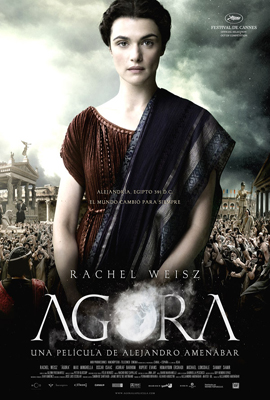
Crítica cinematográfica aparte, este diagnostico de la realidad es errado y puede inducir a actuaciones desencaminadas para salir del atolladero en el que nos encontramos. Nuestro tiempo no está caracterizado por un choque entre ciencia y religión sino por una mezcla de ambas, por una religión de la ciencia, y muy especialmente por la religión de las ciencias económicas y políticas. (seguir leyendo en el Adelantado de Segovia)
Saturday, 12 September 2009
Pragmatismo inteligente
 Acaba de salir el número de septiembre de Revista de Occidente. Después del dedicado a Isaiah Berlin llega este con una entrevista con su heredero: John Gray (ver entradas anteriores). En "Pragmatismo inteligente" Gray conversa sin reservas : a él le gusta, como a mí, la discusión franca, la dialéctica cuerpo a cuerpo, conversar.
El pensamiento de Gray ha sobrevivido la maceración acelerada de los tiempos de crisis. Sus juicios se han acabado confirmando por mor de la experiencia: no es puro y simple realismo es inteligencia arriesgada confirmada por el devenir. En este sentido uno de sus mejores libros es el último, Anatomy, en el se recopilan artículos publicados durante esas décadas en las que se le consideraba simplemente un intelectual incomodo.
Saturday, 7 February 2009
John Gray: contemporary thinking
John Gray's thinking is a good model for contemporary thinking, by which I mean the reflexive and skilful inteligence we need right now.
I have already recomended two of his books, Black Mass, last year just after he presented Critical Modernism, the book by Charles Jencks in the Royal Academy in London; and False Dawn, when commenting Hay Festival in Segovia.
It is very interesting to listen and watch this pragmatic philosopher thinking live on stage.
I have already recomended two of his books, Black Mass, last year just after he presented Critical Modernism, the book by Charles Jencks in the Royal Academy in London; and False Dawn, when commenting Hay Festival in Segovia.
It is very interesting to listen and watch this pragmatic philosopher thinking live on stage.
Sunday, 19 October 2008
Formalism and reflexivity in Economy, not in Architecture
 Krugman, by Alan Cordova, Flickr
 Georges Soros, adam kesher2000, Flickr
It has always been obvious to me that Art and Aesthetics is lacking in this list. Actually, I find surprising that "formalism" and "reflexivity" are terms of great interest in economical debate. Brand new Nobel Prize Paul Krugman and George Soros defend each concept in that arena.
At the end of his book "The Enlightenment´s Wake", John Gray bases his hopes for the future of "western cultures" in the introduction of "some varieties of poetry and mysticism" in modern modes of thinking. Wouldn´t be easier to re-shape our idea of modernity and to include the third aspect of human constituttion Kant discovered in his third Critique: the aesthetic autonomy againt reason and ethics?
Monday, 29 September 2008
Global or Western Crisis?
.JPG)
Photo by El Adelantado de Segovia
There is not a better way of coming back to work (and reality) than to plunge into the Hay Festival in Segovia. Global Crisis: is the world economic system out of control? was the event held on Friday.
At the beginning, the moderator Adam Austerfield (LSE) said that people blame them (economists) for the crisis, and that that was unfair. I agree that economists are not the only to blame as almost everybody finds extremely difficult to think about the way we all think. The root of the crisis is exactly there: current western mentality in which we all are involved.
This crisis is consequence of thinking that mathematics, which is at the base of economy, is able to solve human problems stand-alone. On Friday, in Segovia, the ideal of humanity as a balance between rationality, ethics and aesthetics was truly far away: while the public used their chance asking where to put the money, Danny Quah, the expert in economics from the LSE, simply recommended the Golf Countries without the slightest sign of regret.
This crisis will be solved, no doubt. But the risk of not rectifying our mentality is going to be the prevalence of the political version of the Gresham Law John Gray exposed in his False Dawn: bad capitalism is going to expel good one. By the way, Gray thinks that this is not just another crisis but the fall of USA just as the Soviet Union did when the Berlin Wall came down. Here is the article at The Guardian in which he says so few days ago.
Saturday, 12 July 2008
The "occult powers of mobile phones" and the New Modern


What to read in the summer...? How about Black Mass by John Gray and Critical Modernism by Charles Jenks.
Why they should be read?. Well, I recomend them for two reasons. First, because it is not so easy to find intense reflexions on the present, on what is happening in our lives. Second, because Gray is considered "the most important philosopher alive" and he is the one Charles Jenks chose to back his new agenda at the Royal Academy in London last autumn. I find fascinating the intellectual moves from the New Right to New Labor (Gray) and from Post-modernism to Critical Modernism (Jenks). There is not better medicine for kantian idealists that big doses of post-ideological thinking: have a nice summer.
Subscribe to:
Posts (Atom)



 Posts
Posts


